Things to Do in Czechia
A thousand castles, the world's best beer, and nobody in a hurry
Top Things to Do in Czechia
Find activities and tours you'll actually want to do. Book through our partners -- no booking fees.
Plan Your Trip
Essential guides for timing and budgeting
Climate Guide
Best times to visit based on weather and events
View guide →Day Trips
The best excursions and nearby destinations worth the journey
Explore day trips →Where to Stay
Best neighbourhoods, hotel picks, and booking tips
Find hotels →Travel Insurance
What's required, what coverage matters, and how to get a quote
Read guide →What to Pack
Climate-specific gear, essentials, and what to leave at home
See packing list →When Should You Visit Czechia?
Tap a month for weather, crowds, and highlights
View full year-round climate guide →Explore Czechia
Bohemian Switzerland
City

Brno
City

Cesky Krumlov
City

Hradec Kralove
City

Karlovy Vary
City
Krkonose
City

Kutna Hora
City
Lednice Valtice
City
Marianske Lazne
City
Moravian Karst
City
Olomouc
City
Plzen
City

Prague
City
South Moravian Region
City
Sumava
City
Telc
City
Trebon
City
Your Guide to Czechia
About Czechia
Prague announces itself with the rattle of tram wheels on cobblestone and the yeasty sweetness of trdelník dough turning on charcoal drums at every other corner. Czechia is not Prague. Figuring that out is the best thing that will happen to your trip. The capital's astronomical clock draws its hourly crowd on Old Town Square, and Charles Bridge fills shoulder to shoulder by mid-morning with selfie sticks and caricature artists.
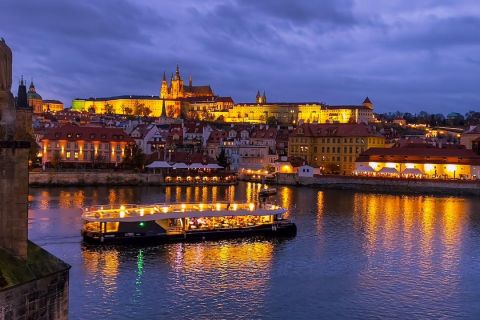
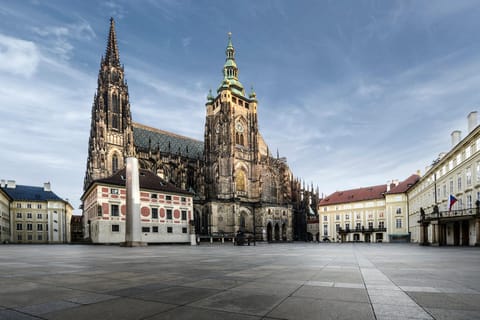
This is the trade-off of a city too photogenic for its own good. Cross the Vltava into Malá Strana, though, and the density drops. Climb toward Prague Castle and the air shifts to damp stone and linden blossoms, with views over terracotta rooftops that stop you mid-step. Beyond Prague, the country opens in ways most visitors never discover. Český Krumlov wraps a thirteenth-century castle around a bend in the Vltava where the river runs shallow and green enough to canoe.
The Moravian wine country south of Brno feels closer to Austria than Bohemia. Rolling vineyards, cellars carved into limestone hillsides, and village festivals where the local whites flow until someone starts singing. In Plzeň, the Pilsner Urquell brewery still draws lager from oak barrels in sandstone tunnels kept at near-freezing temperatures, and the first sip, bitter, clean, with a floral hop finish nothing in a bottle reproduces, explains why Bohemia invented the style the world copies.
Czechia runs on beer, dumplings, and a dry sense of humor that takes a few days to decode. It is stubbornly affordable by western European standards. Absurdly safe. It rewards you for leaving the obvious behind.
Travel Tips
Transportation: Prague's tram and metro system is among the most efficient in Europe, and the city is compact enough that most of what you came to see sits within a few stops of each other. Download the PID Lítačka app before you land. It sells contactless travel passes that work on trams, metro, buses, and the funicular up Petřín Hill, saving you from fumbling with Czech-language ticket machines. For trips beyond Prague, Czech Railways connects Český Krumlov, Brno, Karlovy Vary, and Plzeň at fares that feel absurd by western European standards. One thing to watch: taxi drivers near Wenceslas Square and the main train station still overcharge routinely. Use Bolt or Liftago instead. Skip the negotiation entirely.
Money: Czechia runs on the Czech koruna, not the euro, and the difference matters most at the exchange counter. Airport booths and Old Town change shops advertise zero commission while hiding a spread that quietly eats a painful chunk of your cash. Skip them. ATMs from major Czech banks like Česká spořitelna or ČSOB give the interbank rate, and nearly everywhere in Prague takes contactless cards. Outside the capital, smaller towns and village pubs still lean cash-heavy, so withdraw before you head out. Tipping is straightforward: round up to a comfortable amount at restaurants and tell the server the total when paying rather than leaving coins on the table.
Cultural Respect: Czechs tend to be reserved in a way that reads as cold until you realize it is simply privacy treated as a virtue. Small talk with strangers is rare, and shopkeepers will not greet you with enthusiasm. That is the cultural baseline, not rudeness. Remove your shoes when entering someone's home. This is non-negotiable and nobody will remind you twice. In pubs, sharing a table with strangers is normal, and no conversation is expected. One thing that offends: calling the country Czechoslovakia. That split happened in 1993. Learn děkuji for thank you and pivo prosím for a beer please. Both earn more goodwill than fluent English.
Food Safety: Czech cooking is engineered for cold weather and long pub sessions. Heavy on pork, bread dumplings, and sauces that coat your ribs from the inside. Svíčková, the national dish, layers beef sirloin under a creamy root-vegetable sauce with cranberries and steamed knedlíky, and the best versions come from neighborhood hospody where the menu is Czech-only and the walls have not been repainted since the nineties. Tap water is clean and safe everywhere. The Saturday Naplavka farmers' market along the Vltava sells smoked meats, warm trdelník rolled in cinnamon and walnut, and Moravian wines by the glass. One tourist-trap tell: if the roasted pork knee's skin is not crackling, you are eating yesterday's reheated leftover.
When to Visit
Czechia's seasons split sharply. The right month depends on whether you came for cities, countryside, or beer. Spring arrives late. March stays gray and raw. Temperatures hover around 3 to 8°C (37 to 46°F), with occasional snow flurries catching tourists off guard. April warms to 10 to 15°C (50 to 59°F). Cherry blossoms line Petřín Hill mid-month.
Prague's parks wake up without the summer crush. May is arguably the best single month to visit. Warm days hit 18 to 22°C (64 to 72°F). Evenings stretch long and golden. The Prague Spring International Music Festival fills concert halls and candlelit churches with performances. Hotel rates stay comfortably below their summer peak.
Summer pulls the crowds. June through August brings 25 to 30°C (77 to 86°F). Afternoon thunderstorms roll across the Vltava basin fast. They pass within the hour. Old Town Square packs tight enough to smell the sunscreen. Prague hotels hit their steepest rates between mid-June and mid-September. Book well ahead. That is the only way to avoid overpaying.
The rest of the country empties out. Český Krumlov draws visitors. The sandstone gorges of Bohemian Switzerland stay quiet. The colonnaded spa town of Karlovy Vary stays quiet. The Moravian countryside stays quiet. Even in July. Autumn is the second sweet spot. September holds its warmth around 18 to 22°C (64 to 72°F).
Visitors thin out noticeably. Low-angled light makes every Baroque facade look built for photographs. October drops to 10 to 14°C (50 to 57°F). The Šumava forests turn copper and amber. The wine harvest in southern Moravia brings open-cellar festivals with Burčák. This cloudy, half-fermented young wine is available only for a few weeks each year.
It is sweet and deceptively strong. November turns cold and damp. Hotel rates drop sharply. Prague's Christmas markets begin setting up by month's end. They fill Old Town Square and Náměstí Míru with the smell of mulled svařák, roasted chestnuts, and grilled klobása. Winter divides opinion. December's Christmas markets are the draw.
Wooden stalls. Hot mead. Handmade ornaments. The astronomical clock glows against a dark sky. January and February are the cheapest months to visit by a wide margin. Temperatures sit between minus 3 and 2°C (27 to 36°F). The cold is serious. Prague's cobblestones ice over. The wind along the Vltava cuts through anything lighter than wool.
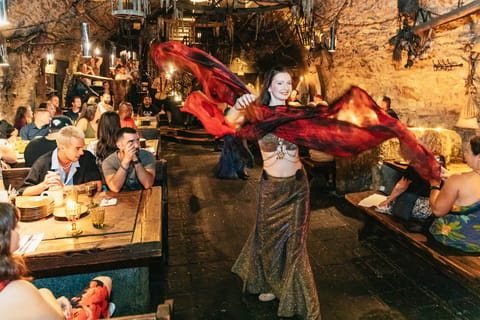
But the pubs belong to locals again. The beer halls steam with warmth and conversation. The thermal baths at Karlovy Vary earn their centuries-old reputation when it is freezing outside. Families do best in late June or September. The weather cooperates without the peak-season density. Budget travelers should target late October through March. Skip the Christmas market weeks. Accommodation drops to a fraction of summer pricing.
More Ways to Experience Czechia
Tours, day trips, and local experiences curated by on-the-ground operators.
Didn't see anything interesting yet?
Browse Viator's full catalog of tours, day trips, food experiences, and private guides in Czechia.
See All Czechia Tours on Viator